



Fastlane
$0 to $1M ARR in two months
A founder story film and six shorts for Fastlane, the AI marketing platform that hit $1M ARR in its first ten weeks.
“Shooting with Lyra Studio has been great, the whole process was incredibly efficient and low friction. They had everything ready, so the whole shoot took a day, and the video has already brought us tons of new leads.”
 Anish SharmaCo-founder, Fastlane
- Client
- FastlaneJock Ferguson, Anish Sharma and Gaurav Thapa
- Shot
- Thu 23 Jul 2026Sydney
- Delivered
- Founder story film, six shortsRaw footage to reuse
- Published
- Fri 31 Jul 202639,000+ views on YouTube
The founder story film
Read the film's transcript
Claude? Is that some new, like... I reckon it's gonna die, dude, honestly. Fastlane. $0 to $1M ARR in 2 months. Here's how they did it. We flew to SF on a 72-hour notice. Went from 0 to $1M ARR in 2.5 months. We've accomplished what we said we would. We will be a $1 billion company, so that remains the goal.
I'm Jock, I'm the CEO of Fastlane, and we make social media marketing really easy for companies. So I'm Anish, I lead tech at Fastlane. I'm Gaurav, I'm the CMO at Fastlane, so I run all of our marketing activities.
What is Fastlane? Our vision is to grow the world's best ideas. The barrier to entry to building anything now is zero. Code is being democratised and building has been democratised, and what if the barrier to entry for marketing that product is also zero? Distribution actually hasn't yet, so we just wanted to solve that problem. We started about a year ago. The initial product was AI agents for every facet of marketing. So let's say you are a business, and you want to promote it, but you don't have enough budget to create any Instagram stories, and you might have the time or the manpower in order to create those videos, just any social media posts for that matter. Fastlane is basically like an AI marketing platform. It learns your company and your brand, generates content for you with the most viral content types. So there's slideshows, or you can have certain memes, or you can have like a UGC, like a person talking about your product. You can tell us which videos you like or you don't like, you pick one you like and you can publish it straight to a bunch of different platforms. So it's basically like a marketing team that never rests.
How's growth been? Fastlane has achieved a whole lot in the last few months. I mean, we only launched, I think, maybe 4 or 5 months ago. We've done, I think, maybe 30 or 40 million views on Twitter alone. One of our best case studies is a user who put like 100 bucks behind a video from Fastlane, and it got 32 million views on TikTok. We've kind of been the most viral startup in SF for a long time. We were part of an accelerator called Founders Inc. We applied for this thing the night before the deadline. In 72 hours, we were in SF.
Hardest challenges so far? I would say the most difficult part was and probably always will be finding the right co-founders. There's no real systematic way to do that. You do have to get really lucky, but you can kind of increase the surface area for that luck by putting yourself in communities, environments or networks where there are like great people. Probably the hardest part was getting investor funding, especially in Australia. Like, you know, we're 22, 24 year olds. The biggest challenge is trying to build a great product. It kind of requires you to speak to customers every day, ship as fast as you can, always understand what's happening in the market, and I guess we're still on that quest, which is just building a great product. But I'm sure we'll get there one day.
Fastlane's engineers The limiting factor in the company was a race to build that thing, and bringing some engineers from Lyra played a really critical role increasing the speed at which we can build product. Within like the first few days, they're shipping huge features, who I know I can just trust with. So my name is William, and I'm a Forward Deployed Engineer at Lyra, and we build and ship products fast and securely. My name is Jason, and I'm currently a Forward Deployed Engineer. I build full stack features for our clients, so I'm shipping features for their product with their founders every day. I'm Hindie, Forward Deployed Engineer at Lyra. At Fastlane, I develop features, fix bugs, also answer like Discord tickets for support.
What did you build? I made one of the content types called Green Screen Mobile App. With this content type you will be able to generate a person holding like a phone. And then on that phone it'll have the app that you want to promote, and then the person will be talking about it, right? For example, it could say this app is like great for tracking your physical health, and then, you know, you guys should check it out or something like that. And I built it end to end, so I'm very proud of that feature. The feature I'm most proud of is this new content type called Character Swap, where you essentially get your own character and a source video, and you can swap your character into that to create a new video. The most interesting part of this was not the feature itself. There's a lot of the investigation that went into it, trying out different models and seeing which worked the best. I just played around with what seemed to be something that I would want to use, and that was the bar that I set. I'm most proud of something called Talking Head Green Screen, which is basically like you put in a demo, and then there's going to be an AI that will talk over your demo, and then you are able to like position where the head is, and then you can modify it. I'm most proud of that because it's technically difficult compared to other content types. And it was one of the first ones where, like, we used a couple of models to make it.
What are the founders like? They've basically done everything. I thought it was going to be very intense. But then once I've talked with them, I was like, oh, this is going to be like a very chill place to work at. I can tell that the founders of Fastlane are super, super passionate about this startup. They really want to scale this into something that's really, really big. And because they're so driven, it also, y'know, like passes down to me, and it also makes me want to make the product really good. When they came to the office a couple of days ago, we actually like bonded, we went to have lunch together. They were really fun to talk with. We can really feel that energy when we're working with them. It's constant positivity, constant speed. Given the name Fastlane, it really feels like we're making a lot of progress every single week. It's really nice when you're working at a place where you know that you will have direct impact on the startup itself and the product that you're producing. For example, at a bigger company, you might just be like a smaller cog in a machine. But working with founders directly at Lyra, you're able to have direct ownership on the stuff that you build, and you're working really closely with the founders. So you can give an opinion and then they'll like consider it really heavily. And in that way you can also feel like you own the product as well.
What's next for Fastlane? We have so much stuff on the roadmap that we have to ship. I mean, in the next couple of months, we want to ship like a paid ads feature that's going to be huge and make it go viral. Have more integrations like posting on LinkedIn, Facebook. The coolest part will be an always-on AI agent, which can help you with your content marketing. Tell you what to post, how much money to put behind something, direct you on your content marketing journey. We must build the fully autonomous, insight-driven version of our product, which actually like finds what the best marketing is for your company and just creates it for you. In the next two years, execute on the $100M revenue product. If we actually build the thing everyone wants and we're able to distribute it, we will be a $1B company, so that remains the goal.
What if you don't feel ready? If you don't have imposter syndrome, you're not doing the right thing. That's actually the great reframe. Only a few months ago, we had no revenue, no real idea of how to build something that a lot of people wanted, just because we had never done that before. Especially if you're junior in Australia, I think you've been conditioned to be more risk averse. But we thought we knew, and we acted as if we knew, and then we did know. Something that Brian Armstrong, the Coinbase founder, says very well, and I'm just going to paraphrase him: action produces information. So the first thing we did, we didn't even build a product, like we built a prototype, because it was so easy with AI. And the first thing we really did was talk to customers. And then we had so many customers, we got to like $50K MRR or something pretty quickly. The best decisions that we've ever made for the company have been when we felt uncomfortable about the decision, and we just did that anyway. Instead of looking up here at the sky, we just had to be very, very action oriented. Fake it till you make it, and you will make it pretty soon.
What's driven your growth? One thing that I feel like I've learned a lot from Jock and Gaurav, and this is probably the thing that's driven our growth the most, is this philosophy of high agency. There's just like no hesitancy in what we do. This like interview that we had on the deadline, we didn't say, ah, it's a deadline, we're just going to skip it. Let's just not do it. We just got in a room that moment, no hesitance, and just shot the video and just sent it to them. Next morning we have the interview again and we're in.
Advice to an engineer starting out? Like, try to be more risk oriented. Always be building. The amount of leverage that you get with software, the things that you can impact from just like a room in your house, just with a laptop, it's just crazy. So because you never know what could pop off, what could get you into certain communities, what could catch the eye of an investor. Like try to be at hackathons, try to be building communities. People landing their first role, building something with friends always works. Especially now because it's so easy to build products. You should just be trying everything. Any idea that comes to mind, just build it. And it shows your commitment.
How do you stand out? Try to be, like, passionate. If you are actually passionate about this thing, it's not cringe to like be part of online communities, to, you know, post content about things you're building. I was really deep into open-source communities and also online communities around software engineering. It sort of built up my own taste, my own decision-making, my own network as well. You're not just doing, like, hackathons for your resume, but you're actually in these communities because you love software engineering. You actually love the craft of what you do. I think that passion is palpable in interviews, it's palpable in the products that you actually make, whether they're slop or whether they're well-designed. It's just so valuable. It'll help you so much in life. You'll grow so much from it. That'd be the advice, you know.
How do you find opportunities and connections? The last thing I'd say is finding the people who are like you, who are willing to build something and also like put their lives into something. Going it solo, you just don't get the network effect that your friends could have. Your friend meets someone and suddenly you have a connect. Uni is a great place to find like that co-founder, or to find those people you can grow with. Code is, like, democratised. The network effects that you get from being around other really smart people still exist. That's like your differentiator. If you can be an engineer who's great at, y'know, sending great cold emails to people, sending like 100 great cold emails a month to CEOs and founders and like CTOs of big companies, just shooting your shot, like, hey, I've used your product, I actually have these few ideas, I'd love to build a free thing for you for a week. Just shooting that shot until serendipity starts to come your way. That's exactly what I would do. And you're bound to win. It is just a matter of time until you start to get lucky.
01The brief
Fastlane had gone from $0 to $1M ARR in ten weeks. The story had to be told in the founders' own words, while it was still happening.
Three founders and the three Lyra engineers who build with them, all on camera in one day. The structure was scripted on a prep call first, so everyone arrived knowing the beats, and the film was live eight days after the shoot.
- The ask
- Shoot day, Sydney
- Film published
Moments from the film
03Shorts
Six vertical cuts from the same interviews, one idea each. Four of them are here.
04On set
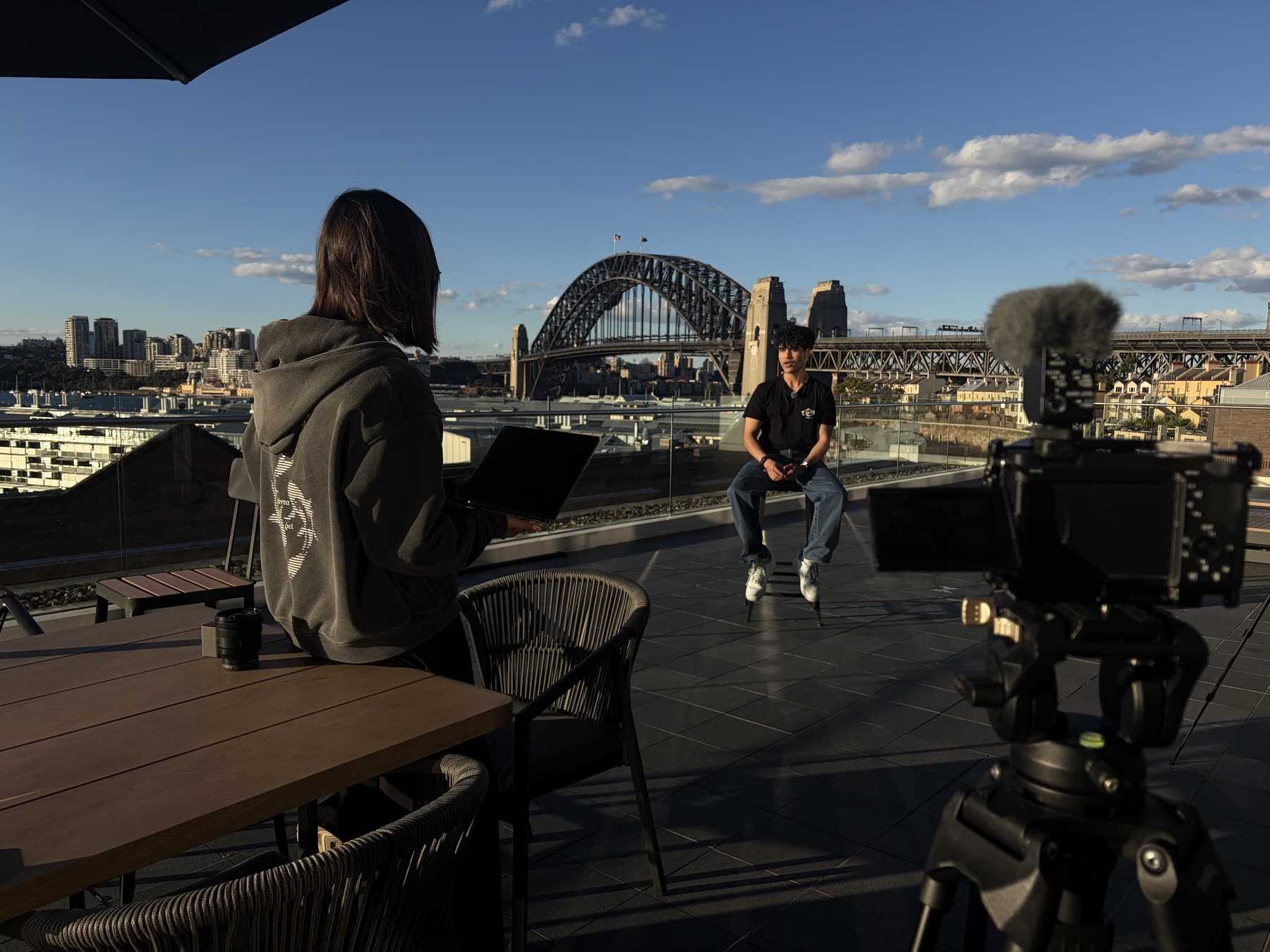
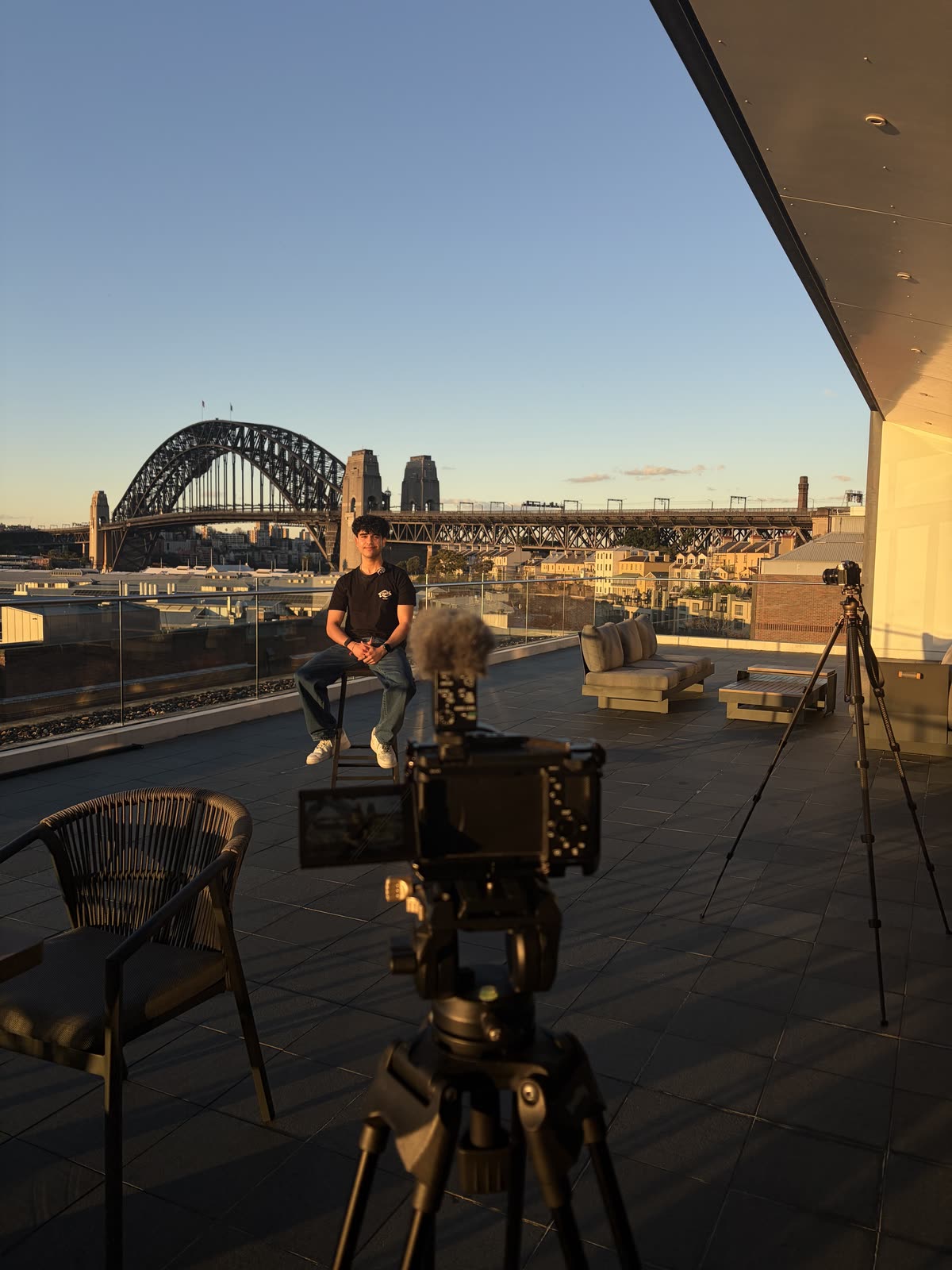
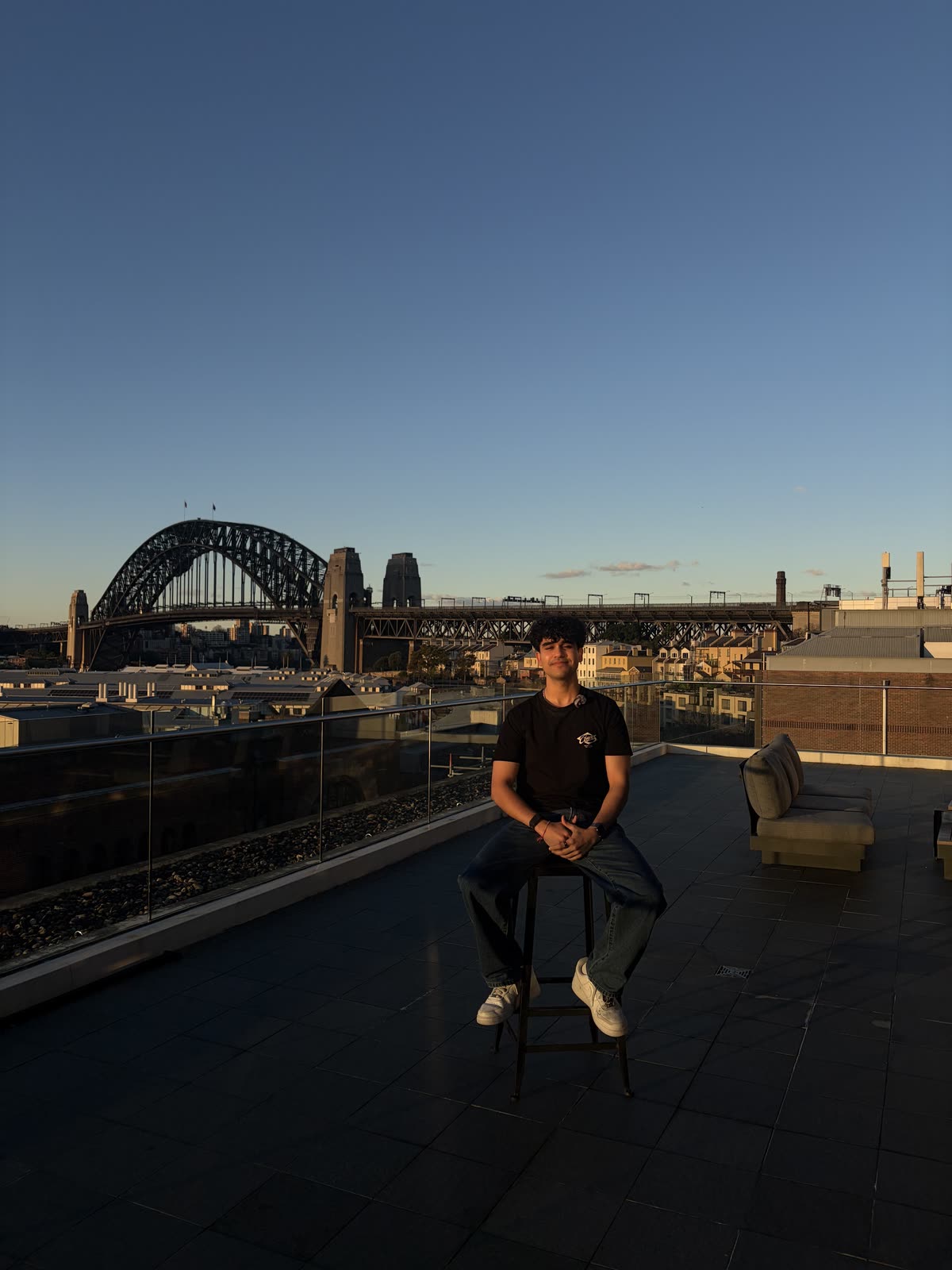
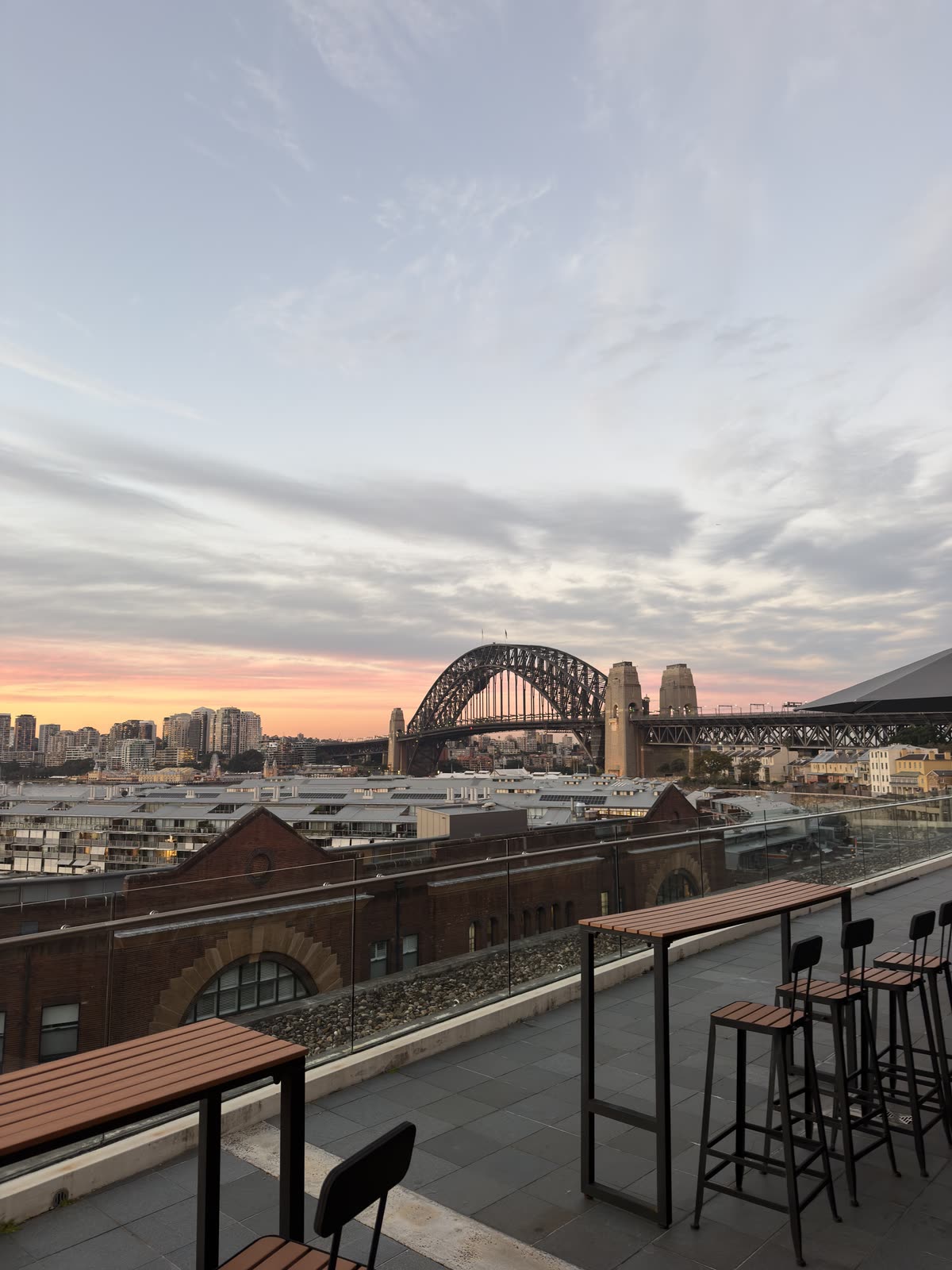
One day in Sydney, on a rooftop facing the Harbour Bridge.
05Results
80k+ impressions across platforms.
- YouTube
- 39,700views
- 21,100views
- 20,500impressions
- X
- 2,100views
Counted on 16 November 2026.
06Credits
- Client
- Fastlane
- On camera
- Jock Ferguson
Anish Sharma
Gaurav Thapa - Lyra engineers on camera
- William Yang
Jason Liu
Hindie Suputra - Location
- Sydney
- Formats
- Founder story film, six shorts
At Lyra we believe simplicity is the key: one clear story, filmed in a day, with nothing on screen that does not need to be there. Lyra Studio is part of Lyra, the Sydney company behind the Australian engineering network that works with US startups, alongside Lyra Capital, which invests in them. Every film we make goes out through the Lyra network of founders, engineers and investors.
Questions
What did Lyra Studio make for Fastlane?
A founder story film of about nine minutes, with the three founders and the Lyra engineers who build with them on camera, plus six vertical shorts cut from the same interviews and the raw footage to reuse anywhere.
How long did the Fastlane film take?
Sixteen days from the first message to the published film. We asked on 15 July 2026, shot on 23 July in Sydney and published the film on 31 July, eight days after the shoot.
How did the Fastlane film perform?
More than 80,000 impressions across YouTube, Instagram, LinkedIn and X by mid-November 2026: about 39,700 views on YouTube, 21,100 on Instagram, 20,500 impressions on LinkedIn and 2,100 views on X. Fastlane co-founder Anish Sharma says the video has already brought them new leads.
Where was the Fastlane film shot?
In Sydney, in one day: the founders on a rooftop facing the Harbour Bridge, and the engineers in a second setup indoors. The structure was scripted on a prep call first, so everyone arrived knowing the beats.
What is a founder story video?
A short documentary where the founders say, on camera and in their own words, why the company exists, what they are building and what it took to get here. Fastlane's runs about nine minutes on YouTube, with shorter cuts for social feeds.